

Aesthetic medicine in London is changing in a way that is easy to miss if the focus stays fixed on single treatments or passing social media interest. The bigger story is that clinic teams are increasingly backing approaches that improve skin quality, support subtle structural changes and reduce the risk of overtreatment. Patients are still interested in looking fresher, but they are often less interested in looking obviously “done”. That is pushing practitioners to favour plans that are layered, measurable and easier to tailor over time.
The trend is not about one miracle treatment replacing everything else. It is about how clinicians combine methods, manage expectations and choose interventions that fit real faces, real skin behaviour and real recovery time. In London, where demand is high and patients are often well informed, the treatments winning long-term support tend to be the ones that show visible improvement without forcing dramatic changes in expression or identity.
A beauty specialist based at medspa.co.uk offers a practical note on this shift: patients increasingly ask for treatments that fit into a longer plan rather than a one-off fix, and that usually means assessing skin quality, facial movement and collagen support before deciding on volume or contour changes. In the specialist’s view, demand linked to a beauty clinic London search often reflects that broader interest in credible advice, realistic timelines and combinations that age well rather than procedures chosen in isolation.
That wider movement helps explain why certain categories are drawing sustained support from aesthetic teams. They answer current patient concerns more effectively than older, more formulaic approaches. They also fit the way many clinics now work: with photography, review appointments, staged treatment planning and more emphasis on maintenance than dramatic intervention. The six trends below stand out because they are being backed not just as popular treatments, but as treatments that can be integrated into a safer and more coherent standard of care.
Skin quality treatments are moving ahead of volume-first plans
One of the clearest shifts in aesthetics is the move away from starting with volume correction when the core issue is actually skin quality. For years, many patients came in asking for fillers because they associated tiredness or ageing with facial hollowing. In practice, clinicians are increasingly finding that texture, hydration, elasticity and light reflection matter just as much, and often more. When skin looks dull, creased or uneven, adding volume alone rarely produces the balanced result patients want.
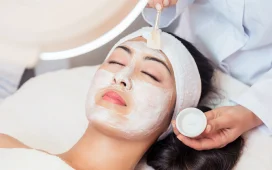
This is why teams are backing treatments designed to improve the surface and function of the skin itself. That may include polynucleotides, skin boosters, microneedling, medical-grade peels and selected biostimulatory approaches. The exact choice varies, but the principle is consistent: better skin quality creates a stronger base for every other treatment. It can make the face appear fresher even when no major contour change has been made.
This trend also reflects a more mature view of “anti-ageing”. Instead of chasing isolated lines, practitioners are looking at how collagen loss, reduced hydration and slower cell turnover affect the face as a whole. A patient may believe they need stronger correction around the cheeks or mouth, but once skin quality improves, the need for heavier intervention often drops. That is one reason these treatments appeal to clinicians who want outcomes that remain natural under different lighting, angles and facial expressions.
There is also a practical advantage. Skin-focused treatment plans are often easier to adjust over time. A practitioner can monitor response, build gradually and combine therapies according to season, downtime tolerance and budget. For busy London patients, that flexibility matters. It allows care to continue without the all-or-nothing logic that once shaped some aesthetic decisions. Teams backing this trend are not dismissing injectables or contour work. They are simply placing skin health earlier in the sequence, where it often belongs.
Neuromodulators are being used with more restraint and strategy
Anti-wrinkle injections remain a core treatment category, but the style of use is changing. The current preference among many aesthetic teams is for more strategic placement, lower dosing where appropriate and clearer attention to facial balance. Rather than freezing every available line, practitioners are focusing on softening movement patterns that create tension, asymmetry or a persistently tired appearance.
This more restrained approach matches what many patients now ask for. They still want smoother foreheads or reduced frown lines, but often without losing normal expression. The most successful outcomes tend to come from understanding how muscles interact across the upper face and, in some cases, the lower face and neck. That means looking beyond single treatment zones and planning according to function, not just static wrinkles.
Clinicians are also backing neuromodulator treatments because they can work well as part of prevention. Younger patients in particular may not need volume restoration or more involved skin interventions, but they may benefit from reducing repeated contraction in areas that deepen early lines. Used carefully, these treatments can help preserve a fresher look without creating a noticeably altered face. For older patients, they can support other interventions by reducing muscle pull that contributes to etched lines or downward drag.
Another factor is longevity of trust. Patients are quick to notice when treatment changes the way they communicate. Heavy dosing may produce a short-term “smooth” effect, but it can also flatten expression or create imbalance between treated and untreated areas. Teams that are thinking in long-term relationships, not one-off appointments, increasingly prefer an approach that leaves room for movement and review.
In London’s competitive market, that matters. Patients talk, compare and return when results feel believable. A careful neuromodulator strategy is therefore not simply a stylistic preference. It is becoming part of a broader clinical standard in which refreshment matters more than obvious intervention, and where the goal is to support the face rather than dominate it.
Collagen-stimulating options are gaining ground as maintenance tools
Another treatment trend drawing strong support is collagen stimulation. This includes approaches that encourage the skin and underlying tissues to rebuild support over time rather than relying only on immediate correction. Aesthetic teams are backing these options because they fit the current demand for gradual, durable improvement and because they can complement almost every stage of an aesthetic plan.
The appeal lies in what collagen-stimulating treatments are trying to solve. Ageing is not only about visible lines or lost volume. It is also about changes in tissue quality, firmness and resilience. When collagen and elastin decline, the skin becomes thinner and less responsive, and the face may begin to look less defined even before major sagging is obvious. Treatments that target this deeper process are therefore being used as a form of structural maintenance.
Biostimulatory injectables, energy-based devices and regenerative skin therapies all sit within this wider trend, although they are not interchangeable. What they share is a slower build. Patients usually need to understand that improvement develops over weeks or months. From a clinical perspective, that is not a disadvantage. It often leads to more realistic expectations and a more disciplined review process. Practitioners can assess change in stages and avoid the pressure to produce instant transformation.
There is also a strong argument for these treatments in patients who want to avoid looking overfilled. In previous years, volume replacement sometimes became the default response to facial ageing. Now, many teams are asking whether better tissue support could achieve part of the same goal with a lighter touch. That does not eliminate the role of filler, but it can reduce the amount needed and improve the final balance.
The fact that collagen-focused plans require patience may actually be one reason serious clinic teams favour them. They tend to attract patients willing to engage with proper consultation, sequencing and follow-up. In a market saturated with quick promises, that slower, evidence-led approach stands out. It positions aesthetic medicine less as a retail purchase and more as a managed course of care, which is increasingly how reputable clinics want to operate.
Device-led tightening and resurfacing are becoming central, not optional
Energy-based treatments are no longer sitting on the sidelines as add-ons to injectables. In many clinics, they are becoming central to how practitioners manage laxity, texture, scarring and pigmentation. Radiofrequency, ultrasound, laser resurfacing and related technologies are being backed because they can address concerns injectables cannot fully solve, particularly when it comes to skin behaviour rather than facial shape.
This trend reflects a better understanding of the difference between contour and quality. A patient may present with mild jowling, enlarged pores, rough texture or acne scarring. Fillers can do very little for those issues, and in some cases may worsen heaviness if used in the wrong place. Device-led treatments offer a more direct response by targeting the skin or supporting tissues through controlled energy delivery. That makes them especially relevant for patients who want visible change but are not ideal candidates for surgery or more aggressive intervention.
Clinic teams also value these treatments because they broaden what a treatment plan can achieve. A patient receiving anti-wrinkle injections may also benefit from laser work for pigmentation. Someone considering lower-face contour refinement may first be advised to improve laxity through radiofrequency-based tightening. This layered planning leads to more coherent outcomes, especially when the aim is freshness rather than major alteration.
Downtime remains a key consideration, and not all device treatments suit every patient or skin type. That is one reason experienced teams back them selectively rather than indiscriminately. The current trend is not about offering the most intense technology available. It is about matching the right device to the right indication, with proper preparation and aftercare. In practice, that can mean choosing lower-downtime options for professionals who need to return to work quickly, or reserving more intensive resurfacing for patients prepared for recovery and repeat assessment.
As technology improves and patient education rises, device-led care is likely to become even more important. It speaks to a more complete model of aesthetic treatment, one that recognises the limitations of injectables and the value of directly treating the skin and supportive tissues that define how the face actually looks.
Subtle profile balancing is replacing isolated feature treatment
A further treatment trend backed by many aesthetic teams is profile balancing. Rather than treating lips, chin, jawline or nose area as separate cosmetic targets, practitioners are increasingly assessing how features work together. This approach has become more prominent because patients often arrive with a highly specific request shaped by online images, while the real issue is proportion across the lower or side profile.
For example, fuller lips may not improve the face if the chin lacks projection or if the perioral area has structural weakness. Likewise, efforts to sharpen the jawline may fall flat if skin laxity or chin position is not taken into account. Profile balancing responds to this by shifting the consultation from “What single feature do you want to change?” to “What proportion would make the face look more harmonious?” That is a clinically stronger question and often leads to more conservative treatment.
Teams back this trend because it reduces the risk of isolated overcorrection. Patients may ask for volume in one area when the more effective treatment is a small amount elsewhere. In skilled hands, that can mean less product overall and a result that is harder to detect as treatment. The current aesthetic preference in Britain leans strongly in that direction. People may want improvement, but many do not want the social visibility that can come with obviously enhanced features.
This wider view also benefits men and women differently. In women, balancing may involve soft support around the chin, cheeks or lips while preserving natural movement. In men, it may focus more on structure, projection and definition without feminising the face. The principle is the same in both cases: proportional change is usually more effective than chasing one fashionable feature.
For clinics, profile balancing supports better consultation quality. It requires photography, explanation and a willingness to say no to treatments that do not serve the face as a whole. That is one reason it has become associated with more reputable practice. A search for a beauty clinic London may begin with a single treatment idea, but patients often stay with a clinic when they feel they have been assessed more intelligently than they expected.
Ongoing treatment planning is overtaking the one-off appointment model
Perhaps the most important trend behind all the others is organisational rather than technical: aesthetic teams are backing long-term treatment planning instead of isolated appointments. This changes how care is delivered. Consultations become more analytical, appointments are spaced with review in mind, and treatments are sequenced according to what will make the biggest visible difference at each stage.
This model suits the realities of modern aesthetics. Most concerns do not arise from one cause, and most good results do not come from one treatment. Skin texture, pigmentation, movement, volume loss and laxity interact. Addressing them properly often means doing less at the first appointment, not more. That may sound counterintuitive from a sales perspective, but it tends to support stronger outcomes and patient retention over time.
Teams favour this approach because it also improves risk management. A staged plan gives the practitioner room to observe healing, monitor response and avoid piling multiple corrections into one session. It is especially useful when treating patients who have had work elsewhere, where previous product placement or tissue response may be unclear. In such cases, restraint is not merely stylistic; it is clinically sensible.
Patients are increasingly receptive to this framework. Many now understand that looking fresher is usually the result of maintenance and sequencing rather than a dramatic single intervention. The most successful clinics explain that clearly. They discuss what can be achieved now, what should wait, and what may not be necessary at all. That level of honesty is becoming part of the service standard patients expect.
In practical terms, the one-off appointment is not disappearing. There will always be demand for single-session treatments. But the direction of travel is clear. Aesthetics in London is moving towards managed care, supported by photography, review protocols and realistic timing. The teams backing today’s most durable treatment trends are not simply choosing popular procedures. They are choosing methods that fit a more measured philosophy of care, where outcomes are built, not rushed, and where the best result is often the one that looks least like treatment at all.
Top of Form
Bottom of Form