

A dental implant has three main parts: the implant itself, which sits in the jawbone, the crown that you see, and a connecting piece between them called the abutment. Although it is hidden from view, the abutment has a large effect on how the final restoration looks and how the gum heals around it.
Stock abutments come in standard shapes and sizes. They work well in many cases, but every mouth is different. The angle of the implant, the depth of the gum, and the position of the neighboring teeth can all mean a standard part is not quite right.
A custom abutment solves that by being designed for one specific patient. Working from a scan, the designer shapes the abutment to support the gum tissue naturally, to place the edge of the crown at a comfortable and cleanable level, and to correct the angle if the implant was placed at a slight tilt.
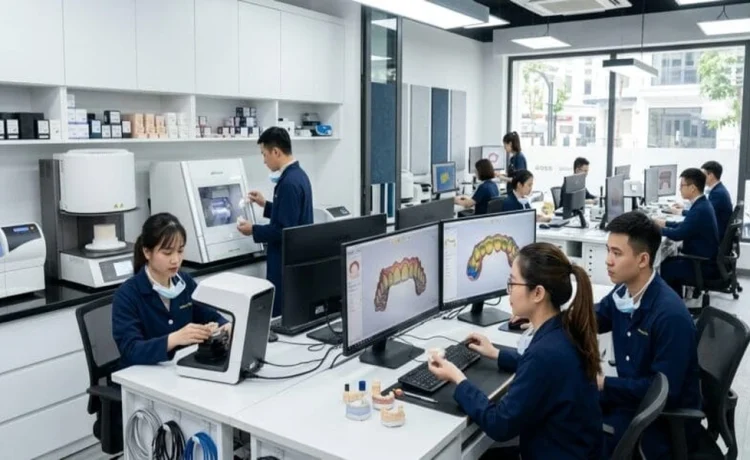
Because of the detail involved, many clinics turn to a dedicated dental cad design service for this work. The design must account for the implant connection, the thickness of the material, and the space available for the crown, and each of those has to be checked before manufacturing begins.
The benefit for patients is a restoration that looks like it emerges naturally from the gum, and one that is easier to keep clean. Poorly shaped abutments can trap plaque and irritate the surrounding tissue over time.
If you are planning an implant, you can ask your dentist whether a custom abutment is recommended for your case. In many situations, the small extra step in design brings a noticeable improvement in both comfort and appearance.